
This article by Robert Loerzel originally appeared in Playbill magazine in April 2012. For hundreds of years, people have questioned whether William Shakespeare really wrote the plays we attribute to him. Strangely enough, a Chicago judge ruled on the question in 1916. For a brief time, an official legal decision was on the books in Cook County… Continue reading What Will Wrote: Chicago’s role in the debate over Shakespeare
Category: Theater
Playbill feature: ‘The Hunchback Variations Opera’
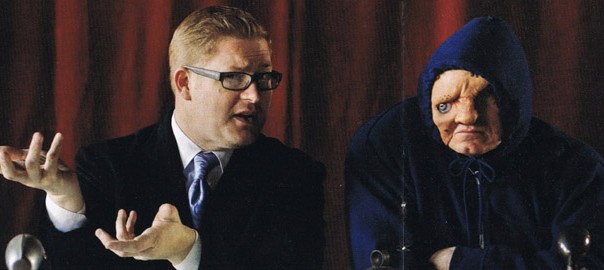
This article by Robert Loerzel originally appeared in Playbill magazine in March 2012. What are Ludwig van Beethoven and Quasimodo doing together on the same stage? Why are they sitting at a table with microphones? And why are they singing operatically about a stage direction written by Anton Chekhov? Audiences may well wonder about these… Continue reading Playbill feature: ‘The Hunchback Variations Opera’
Christmas theater, past and present
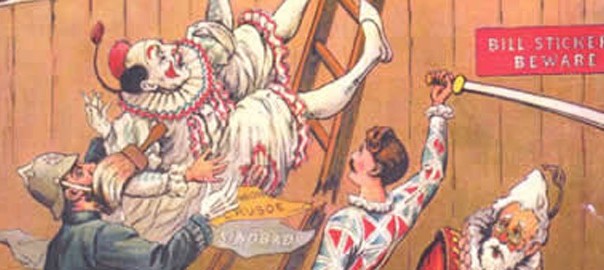
This article by Robert Loerzel originally appeared in Playbill magazine in December 2011. It’s December. Everywhere you turn, the lights twinkle. Christmas carols jingle. And Ebenezer Scrooge, George Bailey or maybe a department-store elf called Crumpet are center stage once again. For Chicago’s theaters, the holidays have always been an important time of year. However,… Continue reading Christmas theater, past and present
Chicago’s theater season off to a strong start
The Huffington Post, October 11, 2011 — Chicago’s fall theater season opened over the past few weeks with a flurry of major opening nights that might make you feel the way Tribune critic Charles Collins did back in 1936. I happened the other day across this quote from Collins, who had just seen several plays on Chicago stages:… Continue reading Chicago’s theater season off to a strong start
Getting lost in ‘Sleep No More’

The Huffington Post, June 6, 2011 — I was lost in a dream for three hours one night last week in New York — wandering through the rooms of a haunted hotel, running up and down stairs as I chased after the characters from a Shakespeare tragedy, witnessing blood spilled and washed off their bodies, watching… Continue reading Getting lost in ‘Sleep No More’
Play review: ‘There Is a Happiness That Morning Is’

The Huffington Post, April 15, 2011 — Each time I see a play by Mickle Maher, it reminds me of how much I love words. And it’s pretty obvious that Maher — an Evanston playwright, actor and member of Chicago’s Theater Oobleck — is in love with words, too. Read my review at the Huffington Post. Photo… Continue reading Play review: ‘There Is a Happiness That Morning Is’
Early African-American theater in Chicago

This article by Robert Loerzel originally appeared in Playbill magazine in January 2011. Walking through downtown Chicago one day in 1882, lawyer Jarvis Blume spotted a shoeshine boy performing Shakespeare scenes for a small crowd of bootblacks and newsboys. Blume was amazed — especially because this 12-year-old thespian was black. He could hardly believe that this… Continue reading Early African-American theater in Chicago
Play review: ‘Who’s Afraid of Virginia Woolf?’

Chicago, ‘Puppeteer’ City
David Cromer Q&A on ‘A Streetcar Named Desire’

This article by Robert Loerzel originally appeared in Pioneer Press on April 29, 2010. In the last few years, David Cromer has been one of Chicago’s most critically acclaimed directors, working on plays including “Our Town,” “Picnic” and “The Adding Machine.” After a stint in New York, Skokie native Cromer is back at one of his… Continue reading David Cromer Q&A on ‘A Streetcar Named Desire’